

@feb17libyaFeb17Libya
Germany faces questions over alleged spy agency involvement in Libya bit.ly/rCmSM2 #libya
After abstaining from the UN vote on the no-fly zone over Libya and opposing NATO’s military intervention, Germany faces an inquest over allegations that its spies were involved in tracking Colonel Gadhafi.
Germany’s foreign intelligence service, the Bundesnachrichtendienst (BND), is facing uncomfortable questions about its possible involvement in the Libya conflict after reports surfaced in the German media that it allegedly knew the whereabouts of ousted Libyan leader Moammar Gadhafi long before his capture and that BND agents passed the information on to NATO.
According to a report in German magazine Der Spiegel, the BND knew that the fugitive former dictator was hiding in his hometown of Sirte for weeks before his capture and subsequent death on October 20.
However, the agency has denied that it was involved in Libya and didn’t know Gadhafi was still in Sirte at the time of his capture. The BND also rejected claims it had passed on any information that led to the air strike on his convoy which led to him fleeing to a storm drain in which he was eventually caught by rebel National Transitional Council (NTC) forces.
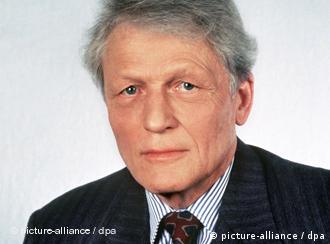
Former BND chief Wieck says the agency is active in Libya
“We were surprised that Gadhafi was there,” a BND spokesperson told Deutsche Welle. “We didn’t expect him to be there…we just didn’t know where he was.”
When asked by Deutsche Welle if this meant that BND operatives were on the ground in Libya but had no knowledge of Gadhafi’s movements, the spokesperson said: “There was no involvement. This is a non-story. Questions like this are based on reports with no substance and are connecting links – dangerous links – which do not exist.”
Despite the BND’s denials of involvement and collusion with NATO forces, French warplanes, operating as part of NATO’s Operation Unified Protector mission, had precise knowledge of the location of Gadhafi’s convoy once the former leader had made the decision to make his dawn escape from Sirte and dash to another loyalist haven in the Libyan desert.
The information needed to target the convoy could only have come from intelligence sources on the ground or from a friendly agency with contacts in Sirte.
Involvement claims
The Spiegel report, quoting unnamed German security insiders, revealed that the BND has an extensive network of contacts and sources in North Africa and that the BND had in fact played an important role in intelligence-gathering in Libya.
“German intelligence has taken an interest in Libya’s various weapons of mass destruction programs and so presumably has analysts and assets focused on Libya,” John Pike, the director of Washington-based analyst group GlobalSecurity.org, told Deutsche Welle. “The BND also has fairly good tradecraft and knows how to keep a secret, so there is no way of knowing what involvement there might have been in Libya.”
Former head of the BND, Dr. Hans-Georg Wieck, revealed to Deutsche Welle that the agency is in fact active throughout the world’s conflict zones, including North Africa.
“The BND is asked to provide intelligence on all crisis areas of the world or those areas that could get troublesome,” Wieck, who led the BND between 1985 and 1990 and is also a former NATO representative for Germany, told Deutsche Welle. “Therefore, the BND has always – always, I stress - been active in the geographical region between the Hindukush and the Mediterranean zone, as well as in North Africa, including Libya, Iraq, Iran, Afghanistan, and Pakistan.”
Dr. Wieck explained that the BND is the only German secret services agency authorized to collect and evaluate information on international affairs of both military and non-military interest and those of importance to the foreign and security policy of the country.
“Intelligence collection and assessment is strictly separated from executive measures, such as conduct of military operations or of conspiracy action,” he added. “It is for the German government to decide how to politically use the intelligence provided but it is international practice among members of NATO to share intelligence.”
